
The 2026 Trade Show Stand Revolution: What Australian Exhibitors Need to Know Right Now
Discover the emerging trends, materials, and technologies reshaping the Australian trade show stand in 2026 — and how smart exhibitors are staying ahead.

Written by
Daisy Mwangi
Event Merchandise
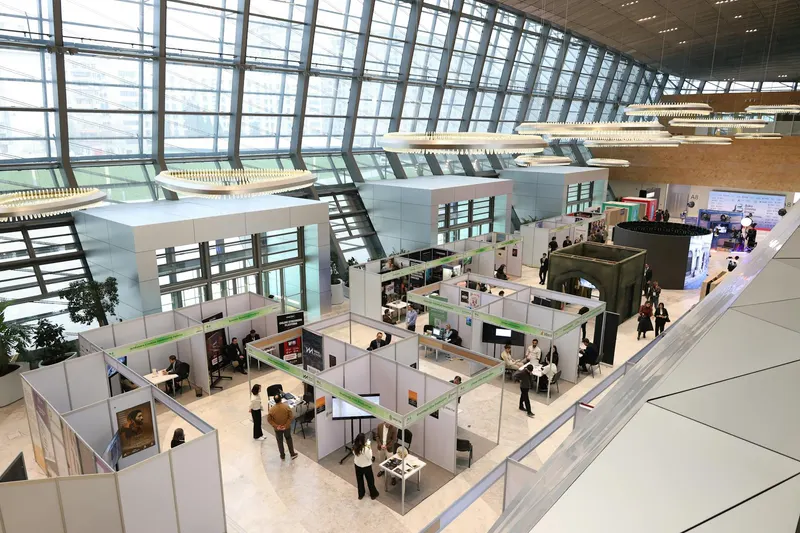
The Australian Exhibition Industry Is Changing Faster Than Most Exhibitors Realise
The promotional products and exhibition industries have never moved faster. After several disrupted years that forced event organisers and exhibitors alike to rethink everything from floor layouts to visitor engagement strategies, the Australian trade show circuit is experiencing a genuine renaissance — and it looks nothing like it did even three years ago.
From the Melbourne Convention and Exhibition Centre to the Brisbane Convention & Exhibition Centre and the ICC Sydney, exhibitors who showed up in 2024 and 2026 with the same stand configurations they used in 2019 looked noticeably behind the curve. The gap between forward-thinking exhibitors and those relying on dated approaches is now plainly visible on the exhibition floor.
So what exactly is changing? The short answer is: almost everything. Materials, technology integration, sustainability commitments, visitor engagement mechanics, and even the physical structure of a trade show stand are all undergoing significant shifts heading into 2026. If you’re planning your exhibition calendar for the year ahead, understanding these movements now will give you a measurable competitive advantage.
Sustainability Has Moved From Buzzword to Baseline Expectation
Perhaps the most significant structural shift in the Australian trade show merchandise space is the complete repositioning of sustainability. This is no longer a differentiating feature that earns you bonus points from eco-conscious visitors. In 2026, it is the minimum viable standard — particularly for exhibitors in sectors like finance, technology, healthcare, and professional services, where corporate ESG commitments are under intense scrutiny.
Recycled and Regenerative Materials Are Taking Over
The promotional products reaching trade show stands in 2026 are being manufactured from material inputs that barely existed in mainstream supply chains five years ago. Ocean-bound plastic — reclaimed from coastal waterways before it enters marine ecosystems — is now being used to produce everything from branded pens and lanyards to drink bottles and tote bags. RPET fabric (recycled PET plastic, typically sourced from used bottles) has become standard in branded tote bags, and exhibitors are being encouraged to lead with this story at their stands, not just print a recycling symbol on the product.
Bamboo continues its strong run in the Australian market, particularly for desk accessories, travel cutlery sets, and product packaging. What’s changed in 2026 is the quality tier — bamboo products have matured considerably, and the premium end of the bamboo range now rivals what was previously achievable only with hardwood or metal.
Seed paper is gaining genuine traction as a giveaway item, particularly for agricultural, environmental, and horticulture-adjacent brands exhibiting at industry events. Plantable business cards and seed paper notepads are emerging as practical novelty items that feel genuinely purposeful rather than gimmicky — especially when the seed varieties are regionally relevant (think native Australian wildflowers or culinary herbs suited to Australian climates).
The End of Throwaway Culture at Trade Shows
Major exhibition venues across Australia are increasingly implementing waste reduction policies that affect what exhibitors can distribute at their stands. Single-use plastic items, non-recyclable packaging, and products that serve no durable purpose are facing both informal social pressure and formal venue restrictions. Exhibitors arriving with mountains of cheap plastic knick-knacks are not only behind the trend — they’re beginning to attract negative attention from sustainability-focused visitors and industry peers.
The shift in visitor expectations is particularly pronounced at events like the All-Energy Australia conference in Melbourne and Sustainability Live events nationally, where audiences actively scrutinise exhibitor behaviour against stated environmental values. However, the ripple effect is spreading across all industries. Even at resources sector events in Perth, procurement-focused visitors are increasingly asking exhibitors direct questions about the supply chains behind their branded merchandise.
Technology Integration at the Trade Show Stand: What’s Actually Useful in 2026
Technology at trade show stands is nothing new — digital screens, QR codes, and LED lighting have been part of the exhibition landscape for years. But 2026 is seeing the arrival of genuinely useful technologies that change how merchandise and stand engagement actually function, rather than simply adding visual noise.
Smart Merchandise Is Arriving on Australian Exhibition Floors
Near-field communication (NFC) chips embedded in promotional products are moving from novelty to practical tool. A branded power bank, notebook, or even a luggage tag containing an NFC chip can be tapped by a visitor’s smartphone to instantly open a landing page, download a product brochure, trigger a LinkedIn connection request, or add contact details directly to a phone without a business card in sight.
For exhibitors at high-traffic, time-poor events — think the Sydney Build Expo or CeBIT Australia-style technology events — NFC-enabled merchandise replaces the frantic business card scramble with a seamless, memorable digital interaction. The product becomes functional both as a physical branded item and as a digital touchpoint, extending the life of every stand conversation.
Personalisation at the Point of Contact
On-stand personalisation has taken a significant leap forward. Heat-press printing technology, compact laser engravers, and tablet-driven variable data printing systems have become portable and affordable enough for exhibitors to offer real-time product personalisation directly at their trade show stand.
Imagine a visitor to a corporate gifts supplier’s stand at the Australian Gift and Homewares Association show being able to select a leather notebook, have their initials embossed on the cover within minutes, and walk away with a genuinely personalised item. That level of engagement creates dwell time, generates social media content, and transforms a branded giveaway into a genuine experience.
This trend is being embraced most aggressively by premium and mid-market brands targeting B2B audiences, where the quality of engagement matters more than volume of giveaways distributed.
The Structural Evolution of the Stand Itself
The physical trade show stand is also changing shape — both literally and philosophically — in ways that directly affect what merchandise and promotional products work best within them.
Modular and Hybrid Configurations Are the New Default
Fixed, custom-built stands are becoming less common as exhibitors seek flexibility across multiple events. Modular stand systems — lightweight, reconfigurable, and transportable — are now the dominant format for small to mid-sized exhibitors at Australian trade shows. This shift has implications for merchandise planning, because modular stands tend to prioritise integrated product display and digital screen space over large storage volumes.
Exhibitors working with modular configurations in 2026 are opting for higher-value, lower-volume merchandise strategies. Rather than filling shelves with inexpensive giveaways for every passerby, they’re curating a smaller selection of premium items reserved for qualified leads and meaningful conversations. This approach aligns perfectly with the broader industry move away from throwaway merchandise culture.
Experience Zones Are Replacing Display Tables
Some of the most effective trade show stands at recent Australian expos have replaced traditional display tables almost entirely with experience zones — interactive areas where visitors engage with a product, a technology demonstration, or a sensory activity. Merchandise in these contexts functions as a reward or memento for participation, rather than a passive giveaway.
A technology company exhibiting at a Melbourne industry expo, for example, might set up an interactive data visualisation experience where visitors answer a series of questions and receive a customised data report — along with a premium branded USB or notebook — as a tangible takeaway from the interaction. The merchandise carries emotional weight because it’s connected to a memorable experience, not simply handed over at the front of the stand.
What Australian Exhibitors Are Prioritising in Their 2026 Merchandise Budgets
Based on emerging industry data and the visible shift in ordering patterns across the Australian promotional products sector, several merchandise categories are experiencing notable growth heading into 2026.
Drinkware Remains Dominant — But the Category Is Maturing
Reusable drink bottles and keep cups remain the highest-volume category for trade show stand merchandise in Australia. The category is maturing, however, which means basic, unbranded-looking stainless steel bottles are losing ground to more design-forward options. Double-walled glass bottles with silicone sleeves, minimalist ceramic-coated tumblers, and collapsible silicone cups are all gaining share at the premium end of the market.
Exhibitors who are getting the most from their drinkware investment in 2026 are those pairing quality products with strong on-brand design execution — because a poorly designed imprint on an otherwise excellent bottle sends a mixed message that undermines the whole strategy.
Apparel and Wearables Are Making a Comeback
After a period of declining interest, branded apparel is experiencing a significant resurgence on Australian trade show floors. The driver isn’t novelty — it’s quality. As blank apparel suppliers have elevated their base product ranges and print technology has improved, branded t-shirts, caps, and jackets that exhibitors and their staff actually want to wear have become viable again.
The most effective use of branded apparel at a trade show stand in 2026 is staff uniforming — creating visual cohesion that makes a stand team instantly identifiable from a distance. Secondary is premium apparel as a high-value giveaway for key clients or competition prizes rather than mass distribution.
Wellness Merchandise Continues to Resonate
The post-pandemic elevation of health and wellness as a personal and corporate priority hasn’t faded. Branded wellness merchandise — think quality sleep masks, fitness resistance bands, mindfulness journals, and aromatherapy rollerballs — continues to perform strongly across a wide range of industry verticals. This category works particularly well for brands in healthcare, insurance, financial planning, and professional development that want to signal genuine care for their audience’s wellbeing beyond the transaction.
Where the Australian Trade Show Merchandise Market Is Heading
The direction of travel for 2026 and beyond is clear. Australian exhibitors are being asked to do more with less — less waste, less clutter, less generic branding — and to deliver more impact, more memorability, and more measurable ROI from every dollar spent on their trade show stand.
The exhibitors who will thrive are those treating their stand merchandise not as a budget line item to minimise, but as a strategic communication tool to invest in deliberately. That means fewer items, better quality, stronger design, smarter technology integration, and a genuine commitment to sustainability that extends beyond a recycling logo.
The exhibition industry in Australia is evolving rapidly, and the trade show stand of 2026 is a genuinely different proposition to the one that was considered best practice even five years ago. The brands that understand this shift — and act on it now — will find themselves standing out on a crowded exhibition floor for exactly the right reasons.