
Promotional Products Supplier Comparison: Which Type Is Right for Your Budget, Timeline, and Brand?
Compare promotional products supplier types, price tiers, materials & use cases to find the perfect match for your Australian business needs.

Written by
James Okafor
Bags & Totes
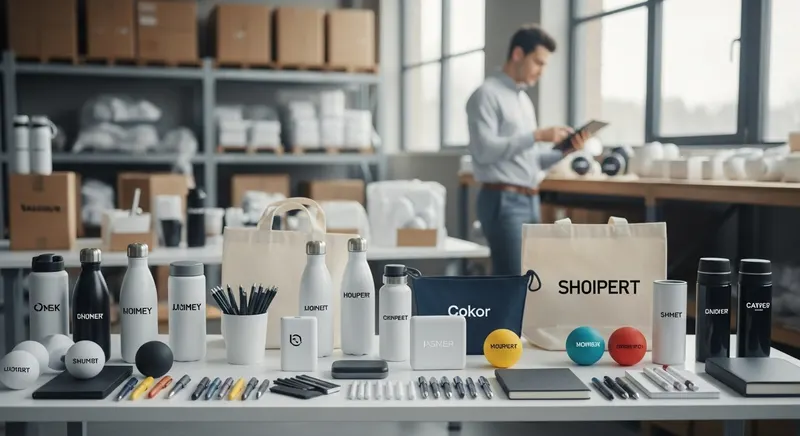
Not All Promotional Products Suppliers Are Built the Same — Here’s How to Tell the Difference
Australia’s promotional merchandise industry is enormous, and the sheer number of suppliers competing for your business can make the buying process genuinely confusing. A small café in Fremantle ordering 200 branded keep cups has entirely different needs from a Perth mining company kitting out 2,000 site workers with safety-compliant branded gear. Yet both businesses might start their search the same way — a quick Google, a few quote requests, and a hope that someone will just make it easy.
The problem is that choosing the wrong promotional products supplier doesn’t just result in a disappointing outcome. It can mean wasted budget, missed event deadlines, brand colours that look nothing like your style guide, and products that end up in the bin rather than in customers’ hands.
This guide takes a structured, comparison-based approach to help you work out exactly which type of supplier matches your specific situation — by breaking down supplier categories, price tiers, materials, decoration methods, and the use cases where each option genuinely shines.
The Four Main Types of Promotional Products Supplier
Understanding the supplier landscape is the first step. The Australian market broadly contains four distinct supplier types, each with real advantages and real trade-offs.
1. Large-Scale Catalogue Suppliers
These are the biggest players — suppliers who maintain extensive product catalogues (often thousands of items), service clients nationally, and have established production pipelines either domestically or overseas, typically through Chinese manufacturing partners.
Best for: Corporate teams in Sydney or Melbourne managing annual merchandise programmes, large-scale event organisers sourcing branded items for conferences, ASX-listed companies with compliance-heavy procurement processes.
Advantages: Competitive unit pricing at volume, broad product range, often have dedicated account managers, established quality control processes, and the capacity to handle large rush orders.
Trade-offs: Minimum order quantities (MOQs) can be high, customisation options may be more templated, and communication can sometimes feel transactional rather than consultative.
Typical price tier: Mid to high per-unit cost at low quantities, but strong economies of scale above 500+ units.
2. Boutique and Specialist Suppliers
These suppliers focus on a specific niche — eco-friendly merchandise, premium corporate gifting, branded apparel, or tech accessories. They typically carry a curated range rather than thousands of items, but go deep in their specialisation.
Best for: Brands with strong identity requirements, sustainability-focused companies (think B Corps and green-certified businesses common in Melbourne and the ACT), luxury hospitality groups, or businesses looking for bespoke gifting solutions for high-value clients.
Advantages: Higher attention to detail, expert knowledge in their category, often better access to quality materials and unique products, and a more personalised service experience.
Trade-offs: Higher per-unit pricing, limited range outside their niche, and potentially longer lead times for truly custom items.
Typical price tier: Premium. Expect to pay 30–80% more per unit than a catalogue supplier, but the perceived value of the finished product often justifies the cost — particularly for executive gifting.
3. Local Print and Merchandise Shops
These are the suburban or CBD-based print shops that have expanded into branded merchandise — adding custom caps, tote bags, drinkware, and branded stationery alongside their core printing services.
Best for: Small businesses, sole traders, sports clubs, local councils, and community organisations across regional Australia (Cairns, Toowoomba, Ballarat, Launceston) who need small quantities, fast turnaround, and the ability to walk in and discuss their brief face-to-face.
Advantages: Low or no MOQs, faster local turnaround, easy communication, and the ability to inspect samples in person before committing.
Trade-offs: Product range is often limited, decoration quality can vary significantly between operators, and pricing per unit is usually higher than catalogue suppliers at any given quantity.
Typical price tier: Higher per-unit cost but lower minimum spend overall — often the most accessible entry point for businesses ordering fewer than 50 units.
4. Online-Only Direct Suppliers
These suppliers operate entirely online, often with self-service artwork upload tools, instant pricing calculators, and no account managers. They’re efficient, fast, and transparent on pricing.
Best for: Experienced buyers who know exactly what they want, understand artwork requirements, and don’t need consultation. Suitable for repeat orders of proven products.
Advantages: Speed, price transparency, 24/7 ordering, and often the lowest headline prices.
Trade-offs: Limited support if something goes wrong, no relationship-based advocacy when deadlines are tight, and risk of colour and quality surprises if you’re ordering something new.
Typical price tier: Often the cheapest headline price — but factor in the cost of mistakes when there’s no expert guiding the process.
Comparing Materials: What You’re Actually Paying For
Material quality is one of the most significant variables in promotional merchandise pricing, and it’s worth understanding what differentiates a $4 tote bag from a $22 one.
Drinkware
The reusable cup market is saturated in Australia — every café and corporate activation seems to be giving them away. But the quality spectrum is vast:
- Entry-level plastic cups (under $5): Suitable for one-off events, low engagement campaigns, or giveaways where volume matters more than longevity.
- Mid-range bamboo-fibre or PP plastic ($6–$12): Good for staff welcome packs, trade show giveaways, and SME client gifting. Decent quality, reasonable shelf life.
- Premium double-wall stainless steel ($15–$30+): These are the cups that people actually use for years. Best for high-value client gifting, executive onboarding kits, and campaigns where brand impression matters.
Bags and Totes
- Non-woven polypropylene bags (under $3): The workhorse of event giveaways. High volume, low cost, widely used at expos and trade shows across Australia. Not particularly eco-friendly despite often being marketed as “reusable.”
- Cotton canvas totes ($5–$15): More durable, printable on both sides, and genuinely reused by recipients. Popular with retail brands, health food companies, and community events.
- Premium jute, recycled PET, or organic cotton ($12–$25): The choice for sustainability-focused organisations. These items carry genuine credibility with environmentally conscious audiences and last considerably longer.
Apparel
- Budget polyester tees or caps ($8–$15): Adequate for large team uniforms or mass event giveaways where budget is the primary driver.
- Mid-range cotton blend apparel ($18–$35): The sweet spot for most corporate uniforms, branded workwear, and staff merchandise. Comfortable, durable, and printable with good results.
- Premium merino, technical performance fabrics, or structured caps ($40–$100+): Reserved for executive gifting, elite sporting teams, and premium corporate accounts where the product itself is a brand statement.
Decoration Methods Compared: What Works Where
Your choice of decoration method affects cost, quality, durability, and which products are even viable options. Here’s a practical comparison:
Screen Printing
Best for: T-shirts, tote bags, flat surfaces with 1–4 spot colours Pros: Cost-effective at volume, vibrant results, durable Cons: Set-up costs make small runs expensive; not ideal for complex multicolour gradients Typical use case: Staff shirts for a Brisbane retail chain ordering 200+ units
Embroidery
Best for: Polo shirts, caps, jackets, bags Pros: Premium appearance, extremely durable, professional finish Cons: Not suitable for intricate fine detail; digitising fee applies; can feel stiff on lightweight fabrics Typical use case: Corporate polos for a Sydney law firm’s conference delegation
Laser Engraving
Best for: Pens, metal drinkware, awards, tech accessories, leather goods Pros: Precise, permanent, no ink or colour fading Cons: Single-colour (the natural material is revealed); not available on all surfaces Typical use case: Engraved stainless tumblers for a Melbourne financial services client gifting programme
Digital (DTG or Full-Colour) Printing
Best for: Tote bags, garments with complex artwork, items requiring photographic reproduction Pros: No set-up costs, brilliant for low quantities, unlimited colour Cons: Less durable than screen printing on garments; premium per-unit cost Typical use case: Small-batch custom tees for an Adelaide startup’s team of 15
Sublimation
Best for: Polyester fabrics, ceramic mugs, mouse pads, lanyards Pros: Full-bleed prints, vibrant and photographic quality, very durable Cons: Only works on white or light-coloured substrates; requires specific materials Typical use case: Full-colour printed lanyards for a Gold Coast conference with 1,200 attendees
Price Tier Decision Framework: Matching Budget to Use Case
Rather than looking for the cheapest option, think about the purpose of your merchandise and work backwards to an appropriate budget per unit.
| Use Case | Recommended Tier | Budget Per Unit |
|---|---|---|
| Mass trade show giveaway | Entry-level | $1–$5 |
| Staff onboarding welcome pack | Mid-range | $8–$20 |
| Client appreciation gift (SME) | Mid to premium | $20–$50 |
| Executive gifting or awards | Premium | $50–$150+ |
| Fundraising merchandise for resale | Mid-range | $10–$25 |
| Community event or school promotion | Entry-level to mid | $3–$10 |
This framework helps you avoid the twin mistakes of overspending on items that will be immediately discarded, or underspending on items meant to make a lasting impression.
Key Questions to Ask Any Promotional Products Supplier Before You Commit
Regardless of which supplier type you’re considering, these questions will quickly reveal whether they’re the right partner for your specific project:
On lead times: What is your standard production turnaround, and what’s the fastest you can realistically deliver if our deadline shifts? (Always ask about their factory cut-off dates for interstate freight to Brisbane, Perth, or Darwin — these vary significantly.)
On colour accuracy: How do you handle PMS colour matching, and can I see a pre-production sample before full production begins? Brand colour accuracy is non-negotiable for many businesses, and a reputable promotional products supplier will have clear processes around this.
On minimum order quantities: What are your MOQs per product, and do they vary by decoration method? Some suppliers impose high MOQs on embroidered goods but are flexible on screen print.
On artwork: What file formats do you accept, and do you have an in-house art team who can prepare files, or does all artwork need to be print-ready from my end?
On product quality: Can you provide a physical sample of the specific product (not just a photograph) before I commit to a full run?
On ethics and sourcing: For apparel especially — can you provide information on the factory of origin and any relevant compliance certifications (OEKO-TEX, Fair Trade, etc.)? This matters increasingly to Australian brands with sustainability commitments.
When to Prioritise Supplier Relationship Over Price
It’s worth being direct about something: the cheapest quote is rarely the best decision when there’s a hard deadline, a significant brand event, or a high-value client relationship on the line.
An experienced promotional products supplier who knows your brand, understands your artwork requirements, and has a track record of delivering accurately and on time is worth a premium — particularly for ongoing programmes. The savings from switching to a cheaper supplier for a single order can be completely wiped out by one production error, one late shipment, or one round of reprints.
Australian businesses that run annual brand activations — whether for Anzac Day retail campaigns, end-of-financial-year client events, or the conference and expo circuit from February through June — benefit enormously from having a reliable, established supplier relationship where communication is efficient and trust is already built.
Making the Final Call
The right promotional products supplier for your business is the one that aligns with your actual use case — not the one with the most impressive website or the lowest headline price. Use the frameworks in this guide to match your budget tier, quantity, material preference, and decoration requirement to the supplier category best equipped to deliver.
Start with a trial order if you’re uncertain. Test their communication, their turnaround accuracy, and the physical quality of the finished item. Then build from there.
The best supplier partnerships in the Australian promotional merchandise industry aren’t transactional. They’re strategic — and they show up most clearly when something unexpected happens and you need a supplier who actually has your back.